
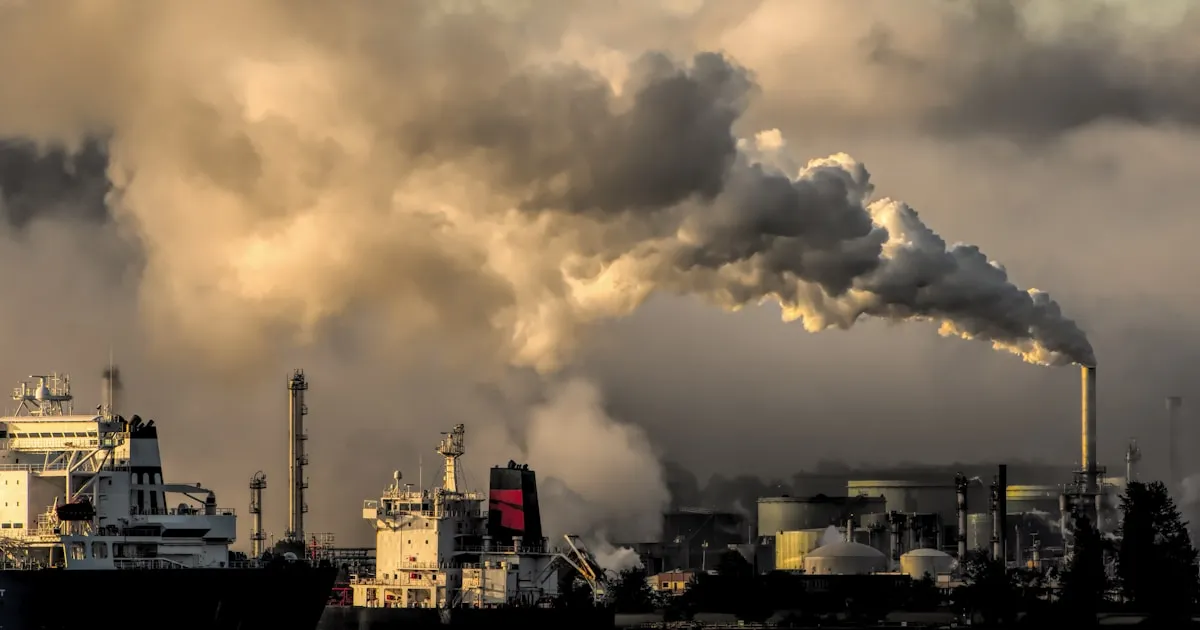
Carbon Offsets Are the Hotel Industry's Indulgences - Pay to Sin, Feel No Guilt
In the sixteenth century, the Catholic Church sold indulgences - pay the priest, and your sins would be forgiven without the inconvenience of actually changing your behavior. In 2026, the hotel industry has its own version: carbon offsets. Pay a broker, receive a certificate, claim carbon neutrality, and keep running your 30-year-old boiler system without a shred of guilt. The parallels are not just rhetorical. They are structural.
The voluntary carbon market was valued at approximately $2 billion in 2025, and the hospitality sector is one of its most enthusiastic customers. Major hotel chains market "carbon neutral stays," booking platforms offer offset add-ons at checkout, and sustainability reports are filled with claims of emissions reductions that never actually reduced anything at the source. The offsets did the heavy lifting. The hotel changed nothing.
The Offset Myth: What You Are Actually Buying
When a hotel purchases carbon offsets, it is paying for an emissions reduction that supposedly happens somewhere else. Plant trees in Brazil. Fund a cookstove project in Kenya. Invest in a wind farm in India. The theory is simple: one tonne of CO2 removed or avoided anywhere in the world cancels out one tonne emitted at your hotel.
The reality is far messier.
A landmark investigation by The Guardian, Die Zeit, and SourceMaterial in 2023 analyzed Verra-certified rainforest protection credits - the most common type used by major corporations including hotel chains - and found that over 90% of the credits examined were likely "phantom credits" that did not represent real emissions reductions. The forests were not under the threat level claimed, the baselines were inflated, and the actual climate benefit was a fraction of what was sold.
This is not a fringe finding. A peer-reviewed study published in Science in 2023 by researchers at Cambridge and VU Amsterdam found that forest-based carbon credits consistently overestimated their climate benefits by a factor of two to ten. The methodologies used to calculate "avoided deforestation" relied on counterfactual scenarios - projections of what would have happened without the project - that were systematically inflated.
When the baseline is fiction, the offset is fiction. And a hotel claiming "carbon neutral" based on fictional offsets is making a fictional claim.
The Moral Hazard Problem
Even if every offset represented a genuine, additional, permanent emissions reduction - which the evidence overwhelmingly suggests they do not - the offset model has a fundamental structural problem: it removes the incentive to decarbonize.
This is textbook moral hazard. When you can pay a relatively small fee to neutralize your emissions on paper, the business case for expensive operational changes collapses. Why spend EUR 800,000 on a heat pump conversion when you can buy EUR 15,000 worth of offsets and achieve the same marketing claim?
A 2024 study published in Nature Sustainability examined corporate offset purchasing and found that companies with the largest offset portfolios had, on average, slower rates of actual emissions reduction than comparable companies that did not purchase offsets. The offsets were not supplementing decarbonization. They were substituting for it.
For hotels, this plays out predictably. The properties buying offsets are often the same ones deferring capital-intensive decarbonization projects. The offset budget becomes the sustainability budget. The actual hard work - building envelope improvements, electrification of heating systems, on-site renewable energy, laundry system upgrades - gets pushed to "Phase 2," which never arrives because Phase 1 (buying certificates) already delivered the marketing outcome.
The Permanence Problem
Carbon offsets assume permanence. When a hotel buys a tree-planting credit, the assumption is that the tree will grow, absorb carbon, and store it for decades or centuries. The certificate is issued immediately. The carbon storage is a promise spanning generations.
Promises spanning generations do not have a great track record.
In 2021 and 2022, record wildfires in the western United States burned through forests that had been used as carbon offset projects, including buffer pools maintained by California's cap-and-trade program. The carbon stored in those trees was released back into the atmosphere in days. The offset certificates, however, remained on the books of the companies that purchased them.
Climate change itself is increasing the frequency and intensity of wildfires, droughts, and pest outbreaks - all of which threaten the permanence of forest-based offsets. You are using a tool whose reliability decreases as the problem it is supposed to solve gets worse. That is not a strategy. That is a feedback loop.
What Hotel Carbon Neutrality Actually Means
When a hotel chain announces that all stays are "carbon neutral," here is what that claim usually means in practice:
- The hotel calculated its emissions using a methodology that likely excludes Scope 3 - the vast majority of its actual footprint, including guest travel, supply chain, food sourcing, and construction materials
- For the emissions it did count, it purchased offsets from a broker at a price of roughly $5 to $15 per tonne of CO2
- Those offsets were generated by projects whose actual climate benefit is, based on the available evidence, significantly overstated
- The hotel made no material changes to its energy systems, building envelope, or operational processes
- The total cost was low enough to be absorbed as a marketing expense
This is not decarbonization. It is a transaction that converts money into a claim. The atmosphere does not care about your claim. It cares about the molecules.
The Regulatory Reckoning Is Coming
The European Union's Green Claims Directive, expected to be fully implemented by 2026-2027, will require that environmental claims be substantiated with verifiable evidence and that offset-based claims be clearly distinguished from actual emissions reductions. Companies will not be able to claim "carbon neutral" or "climate neutral" based solely on offsets without prominently disclosing that the claim relies on compensation rather than reduction.
France has already gone further. Since January 2023, it has been illegal for companies in France to claim "carbon neutrality" in consumer-facing marketing unless they can demonstrate a comprehensive, transparent decarbonization pathway. Offsets alone do not qualify.
Hotels operating in the EU market need to prepare for a regulatory environment where offset-based claims become liabilities rather than assets. The reputational risk of having your "carbon neutral" marketing declared misleading by a regulatory body far exceeds the marketing benefit of the claim itself.
What Honest Climate Action Looks Like for Hotels
If you strip away the offsets and the certificates and the marketing, what is left? The actual work.
Measure everything. Not just Scope 1 and 2. Your food sourcing emissions, your guest amenity supply chain, your textile lifecycle, your construction and renovation materials. The full picture.
Reduce at the source. Electrify heating. Modernize HVAC. Install on-site solar where feasible. Switch to ozone laundry systems. Implement AI-driven building management. These are expensive, slow, operationally disruptive - and they are the only interventions that actually reduce emissions.
Set science-based targets. The Science Based Targets initiative (SBTi) provides a framework for setting reduction targets aligned with climate science. As of 2025, fewer than 100 hotel companies globally had set SBTi-validated targets. The rest were setting their own targets, buying offsets, and calling it a day.
If you buy offsets, buy them last. After you have measured, reduced, and set targets for further reduction, use high-quality offsets for the residual emissions you genuinely cannot eliminate yet. This is the "mitigation hierarchy" - avoid, reduce, then offset. The industry has inverted it: offset first, reduce maybe later, avoid nothing.
Be transparent about what you have and have not done. "We reduced operational emissions by 18% since 2022 and offset the remaining 82% while we work toward our 2030 reduction target" is an honest statement. "Carbon neutral" is not.
The Bottom Line
Carbon offsets are the path of least resistance, which is precisely why the hotel industry loves them. They require no capital expenditure, no operational disruption, no guest-facing changes, and no difficult conversations with ownership groups about return on investment for sustainability projects.
They also accomplish almost nothing for the climate.
The hotels that will lead in the next decade are the ones doing the unglamorous, expensive, operationally painful work of actual decarbonization. They will not be carbon neutral on paper. They will be measurably less carbon-intensive in reality. And when the regulatory environment catches up - which it is doing right now - they will be the only ones whose claims survive scrutiny.
Stop buying indulgences. Start doing the work.