Halkidiki Evacuated 500 Tourists by Fishing Boat. Your Plan Still Assumes the Road Is Open.
Around 500 tourists left Halkidiki on fishing boats yesterday. Nobody planned it that way. The fire service looked at a three-kilometre wall of flame up to 30 metres high, looked at the coast road already jammed with cars, and decided that driving people out would get them killed.
So they put them in the water instead. Small boats, coast guard vessels, fire brigade craft, and roughly 200 people taken out to a ship waiting offshore. That was the evacuation. Improvised, at night, by whoever had a hull.
If you run a coastal property anywhere in the Mediterranean and your emergency plan has one exit on it, and that exit is the road, you don't have a plan. You have a hope.
What actually happened
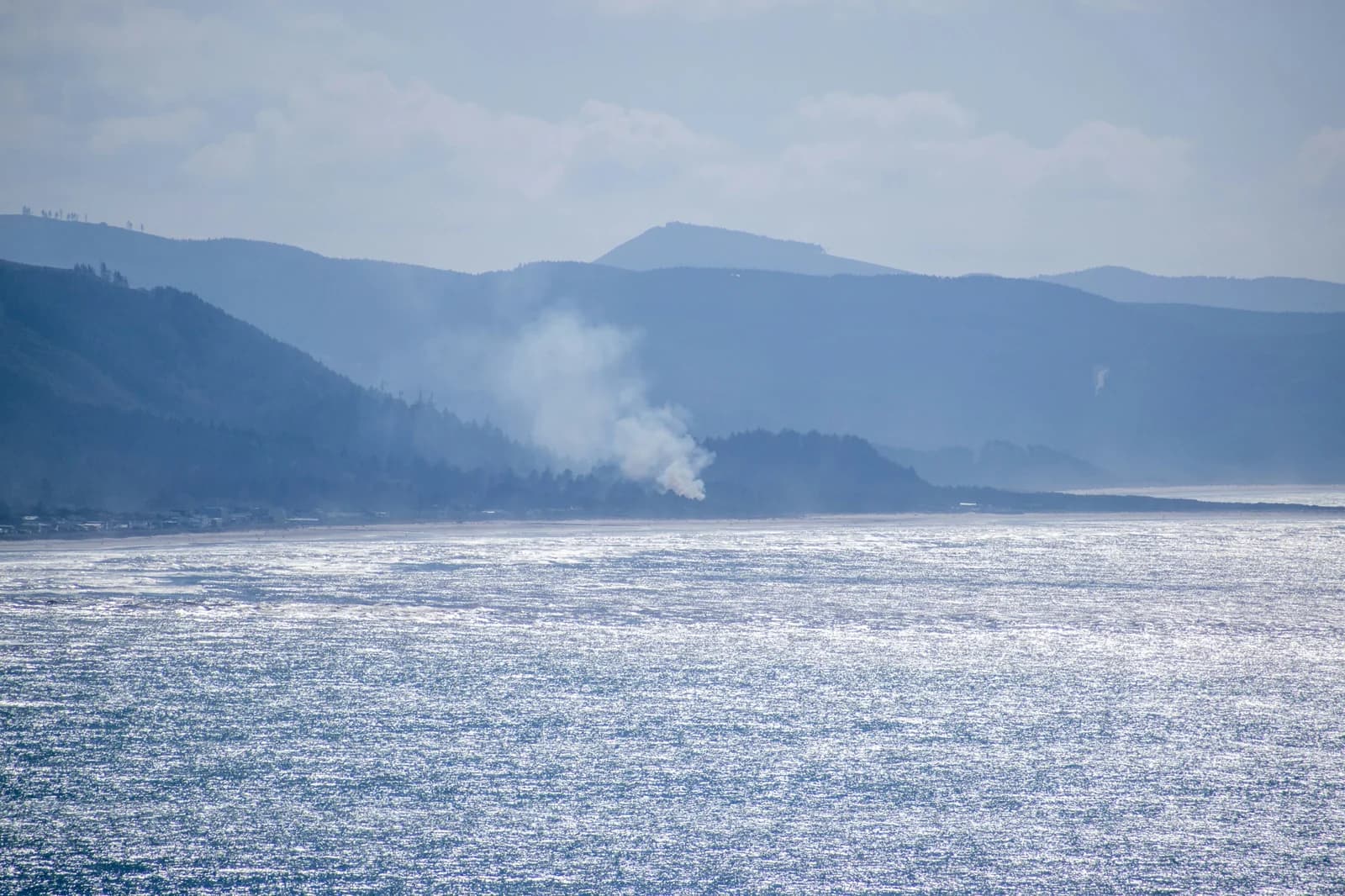
The blaze tore across the Halkidiki peninsula south of Thessaloniki on Thursday and bore down on Siviri and Fourka, two resort towns packed to capacity in the middle of August. More than 200 firefighters, water-bombing planes and helicopters fought it for hours. Two firefighters were hospitalised. Authorities banned public access to the region's pine forests while forecasters warned of winds hitting 100 km/h.
Crews got it under control late, and they're still watching for flare-ups. Greece remains under its highest wildfire alert nationwide, and this comes weeks after a fire near Athens killed two helicopter crew and burned 110 square kilometres.
The same night, a fire ripped out of a pine forest and into the Croatian tourist town of Lokva Rogoznica, destroying homes and vehicles. About 1,000 displaced residents ended up sheltering in a sports hall in nearby Omis. The coastal road closed. Traffic backed up for miles. Same story, different country, roughly the same hour.
In France, Météo France put four departments on its highest wildfire alert on Friday, warning the risk of ignition and spread is "very high compared with summer norms". The Aude fire near Carcassonne was contained after crews saved 73 homes. The Pas-de-Calais fire near Mont-Frieux was still burning into Friday morning. A fire near Stourbridge in the UK damaged at least six properties on the region's hottest day of the year.
That's four countries in about 24 hours. This isn't a Greek problem.
The road is always the first thing to fail
Here's the part most operators skip. In a resort town, the road doesn't fail because of the fire. It fails because of the guests.
Coastal roads in places like Siviri, Lokva Rogoznica, or half of Kassandra are single carriageway, often with parked cars on both sides. The moment people smell smoke, several hundred of them get in their hire cars at the same time and drive toward the same exit. You now have a stationary metal queue of tourists in the path of a fire that moves faster than they do. Gridlock in Halkidiki wasn't an unlucky detail, it was the predictable result of everyone acting individually and nobody coordinating.
Which is exactly why the fire service overrode the road and went to the sea.
So the useful question for any operator on a coast, a peninsula, an island, or up a single valley road is not "do we have an evacuation plan". You do. It's laminated and it's next to the fire panel. The question is whether that plan survives the road being unusable.
What to fix before the next one
Get a second exit that isn't tarmac. If you're on the water, that's the water. Find out today which local boat operators, fishing co-ops, or dive schools are within reach, get names and mobile numbers into your emergency folder, and have a rough sense of how many bodies they can move in one run. This is a fifteen-minute phone call in August that becomes the whole plan in October.
Kill the car park muster point. Most hotels default to it because it's the biggest open space they own. In a wildfire it's the worst possible place to gather guests, because it's full of fuel and it's the exact spot everyone will try to drive out of. Pick a beach, a jetty, a stone terrace, something on the seaward side.
Make your in-house list work offline. If pulling a guest manifest requires your PMS and your wifi, and the power is out, you cannot tell the coast guard how many people you're missing. Print it at every shift change. Yes, actually print it. A sheet of paper on a clipboard has never once failed to boot.
Decide the trigger before the smoke. The worst version of this is four managers standing in reception debating whether it's serious enough while the wind picks up. Name one person per shift who can call an evacuation without asking anyone, and write down what conditions mean they call it. Waiting for the official 112 alert is not a strategy. That message arrives to confirm what you should already be acting on.
Sort out language. If your guest mix is German, British, and Polish, an announcement in Greek and broken English is going to leave people standing in corridors. Pre-write the three sentences that matter in the languages you actually host, and put them on your staff phones.
Decide your money policy now. Guests who evacuate will ask about refunds, and they'll ask within an hour. Waive the cancellation, eat the night, and say so immediately. The property that argues about a non-refundable rate while somebody is standing on a beach with their kids has just bought itself a decade of reviews. The one that says "you're covered, don't think about it" gets the opposite.
Stop calling this a summer risk
The industry keeps treating wildfire as an event that happens to somebody else's resort in a bad year. Greece is under maximum alert nationwide right now. France has departments above summer norms. Croatia is setting record coastal temperatures. This is an operating condition for Mediterranean hospitality, in the same way that hurricane season is an operating condition in Florida.
Florida hotels don't debate whether to have a hurricane plan. They have shutters, a supplier list, a pre-agreed refund policy, and a chain of command, and they review it every year because it's just part of running the business. Mediterranean coastal operators are years behind on the equivalent, and the excuse that it's unpredictable stopped holding up somewhere around the third consecutive summer of this.
The fire in Halkidiki got contained. The tourists got off the peninsula. On paper it worked.
It worked because coast guard crews and people with fishing boats improvised well under pressure at night. That's not a plan you can rely on twice. Go make the phone call today, while there's nothing burning near you, and find out who owns a boat.